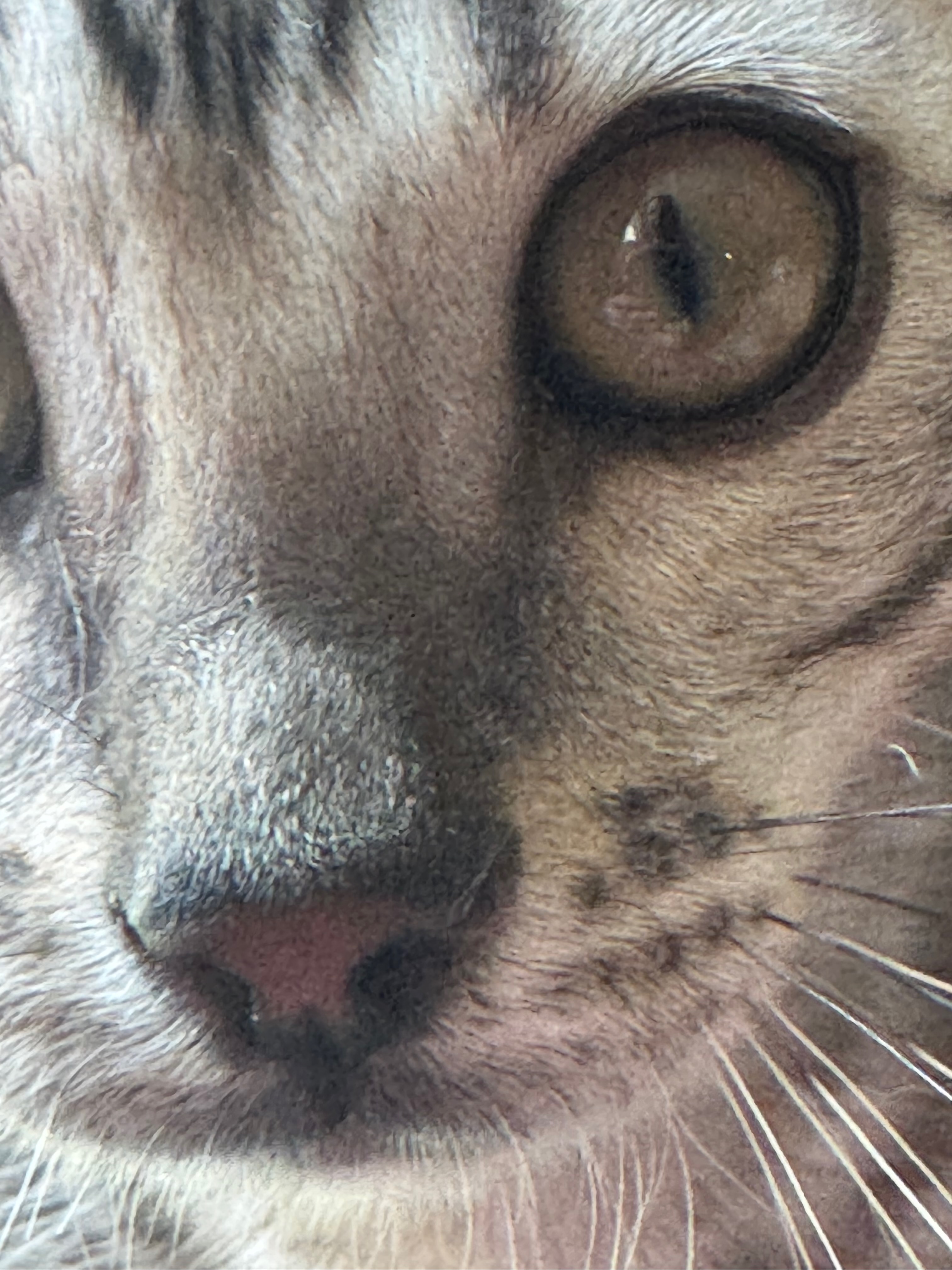
When you look at a Bengal cat — truly look at one, at the rosettes and the glittering coat and the way it moves through a room like it owns every inch of it — you are looking at something that is not entirely domestic. Somewhere in that animal's lineage is a small wild cat that hunts alone through the forests of Asia. That cat is the Asian Leopard Cat, and it is the reason Bengals are unlike anything else you will ever share your home with.
Who Is the Asian Leopard Cat?
The Asian Leopard Cat (Prionailurus bengalensis) is a small wild felid native to South, Southeast, and East Asia — ranging from Pakistan and India through China, Korea, and down through the Indonesian archipelago. It is roughly the size of a domestic cat but built differently — leaner, longer-limbed, with larger eyes adapted for low-light hunting and a coat covered in bold spots and rosettes that echo, in miniature, the markings of a leopard.
It is a skilled hunter, primarily nocturnal, and intensely territorial. It lives near water — rivers, streams, coastal forests — and is a confident swimmer. It is not a social animal by nature. It does not seek out company. It is, in every sense of the word, wild.
"The Asian Leopard Cat is not a pet. But its descendant — the Bengal — carries just enough of its wildness to make every day with one feel like something extraordinary."
How the Bengal Was Created
The Bengal breed was developed by geneticist Jean Mill beginning in the 1960s, with serious breeding work resuming in the 1980s. Mill crossed Asian Leopard Cats with domestic cats — initially to study whether hybrids might be resistant to feline leukemia, and later with the explicit goal of creating a domestic cat with the visual beauty of a wild cat and the temperament of a companion animal.
The early generations — F1, F2, F3 — were true hybrids, often difficult to handle and not suitable as pets. It took several more generations of selective breeding, crossing hybrids back to domestic cats, before the Bengal emerged as a stable, domestic-tempered breed that retained the wild look without the wild behavior. TICA accepted the Bengal for championship competition in 1991.
Today, a show-quality Bengal is at least four generations removed from the Asian Leopard Cat — what the registry calls SBT (Stud Book Tradition). The wild blood is distant but it is never entirely gone, and any Bengal owner who has watched their cat stalk a toy or leap from a standing position to the top of a bookshelf understands exactly what that means.
What the ALC Gave the Bengal
The Asian Leopard Cat's genetic contribution to the Bengal is visible in almost every aspect of the breed. The rosettes — two-toned, outlined spots that distinguish a quality Bengal from a simple spotted tabby — come directly from the ALC. The glitter gene, which gives Bengal coats their extraordinary shimmer in light, is believed to have originated with the wild ancestor. The love of water, the athleticism, the intense prey drive, the curiosity that borders on obsession — all of it traces back to a small wild cat hunting along an Asian riverbank.
Even the Bengal's personality — engaged, demanding, intensely present — reflects its wild heritage. The ALC is not a passive animal. Neither is the Bengal.
Why This Matters for Breeders
At Empress Bengal Cattery, the ALC heritage is not a marketing point — it is a responsibility. Breeding Bengals means breeding animals that carry genuine wild genetics, and that requires understanding what those genetics produce: high intelligence that needs stimulation, energy that needs an outlet, social bonds that are deep and meaningful but formed on the cat's terms.
Every kitten we place goes to a family that understands what they are bringing home. Not a decorative cat. Not a passive companion. An animal with history in its coat and its eyes and the way it watches the world — descended, however distantly, from something that was never meant to be tamed.
Ready to Bring Home a Piece of the Wild?
Our kittens are raised with the care and knowledge that their heritage deserves. Every placement begins with a conversation.
Inquire Now