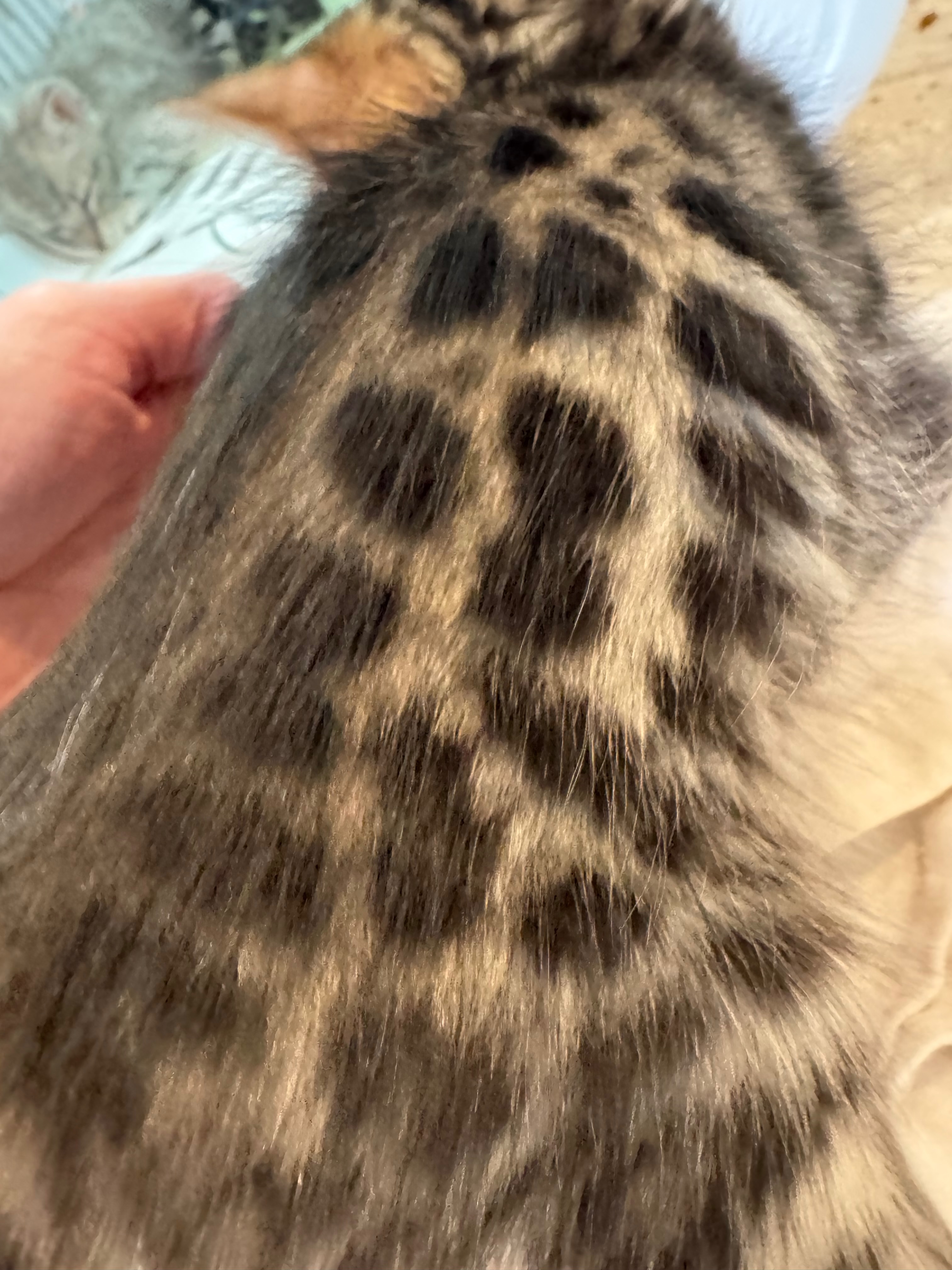
Bengal color names can feel like another language. Seal Silver Mink Spotted Tabby. Charcoal Blue Spotted Tabby. Black Silver Marble. If you are new to the breed, a listing description can read like a genetics exam. Here is a plain-language guide to every major Bengal color — what it looks like, what produces it, and what to know before you fall in love with one.
The Base Colors
Brown / Gold
The original Bengal color and still the most common. A warm golden to russet ground coat with rich brown to jet-black markings. The contrast between ground and marking color is what judges evaluate most critically — the more dramatic, the better. Brown Bengals range from pale golden to deeply rufous, and the best examples glow.
Silver
Produced by the inhibitor gene, which suppresses the warm pigment in the ground coat and replaces it with a cool white to silver-grey. The markings remain dark — black or dark grey — creating an extraordinarily high-contrast, almost monochrome cat. Silver Bengals are dramatic and striking in a way that photographs exceptionally well.
Blue
A dilute expression of brown. The dilute gene lightens the coat to soft blue-grey tones, with slate-colored markings on a cool, muted ground. Blue Bengals are rare because both parents must carry the dilute gene. They are not currently recognized for TICA Championship competition but are CFA-accepted and prized for their unusual, understated elegance. At Empress, our queen Blue is a Blue Charcoal — one of the most striking expressions of this color.
The Snow Colors
Snow Bengals are produced by one of three genes — Lynx Point, Sepia, or Mink — each of which interacts differently with the base coat to produce a pale, often cream-to-white ground color with visible markings. Eye color is the clearest indicator of which snow gene a cat carries.
Seal Lynx Point
Carries two copies of the Lynx Point gene. The palest of the snows — a cream to off-white ground with ghost-like markings that may be subtle at birth and develop with age. Eye color: blue, always. The combination of pale coat and blue eyes gives the Seal Lynx Point an ethereal, almost otherworldly appearance.
Seal Sepia
Carries two copies of the Burmese (Sepia) gene. The darkest of the snows — a warm ivory to light brown ground with clearly contrasted markings. Eye color: gold to green. Seal Sepias often look like a lighter version of a brown Bengal at first glance, but the coat has a distinctly warm, creamy quality.
Seal Mink
Carries one copy of each — one Lynx Point gene and one Sepia gene. Falls between Lynx and Sepia in depth of color. The ground coat is warm cream to light tan, markings are clearly visible, and the eye color is the signature aqua — blue-green — that is unique to the Mink. The rarest of the three snows to produce deliberately, because it requires both genes to be present.
Charcoal
Charcoal is not a base color — it is a modifier that dramatically darkens the overall coat expression. A Charcoal Bengal has a very dark, sooty ground color, bold face markings including a distinctive "mask" and "cape," and extreme contrast between the dark and light areas of the coat. Charcoal can appear in any base color — Brown Charcoal, Silver Charcoal, Blue Charcoal — and always produces a cat of extraordinary visual impact. TICA recognizes Charcoal across all accepted color classes.
Pattern: Spotted vs. Marble
Color and pattern are separate characteristics. Every color above can appear in either a Spotted Tabby or Marble Tabby pattern. Spotted Bengals have distinct spots or rosettes — the most prized being two-toned, outlined rosettes in paw-print or arrowhead shapes. Marble Bengals have a flowing, horizontal swirling pattern that must be clearly distinct from a bulls-eye to meet the breed standard. Both are equally valid; personal preference determines which appeals more.
Have Questions About a Specific Color?
We are happy to talk genetics, color expectations, and what to look for in a quality Bengal of any color. Reach out anytime.
Ask Us Anything